GLP-1 Injection Tracker: Schedule, Site, and Dose Log
Use GlucoPal on iPhone to log GLP-1 injection dates, doses, and sites, then review your medication history alongside symptoms and weight.
A note from the editors. This article is for informational purposes only and does not constitute medical advice. Always consult your physician or qualified health provider before making changes to your medication or treatment plan.
A GLP-1 injection tracker is a simple place to record when you took your shot, what dose you used, where you injected, and what happened afterward. For people using weekly GLP-1 or related incretin medications for weight loss, that record can prevent a lot of guessing.
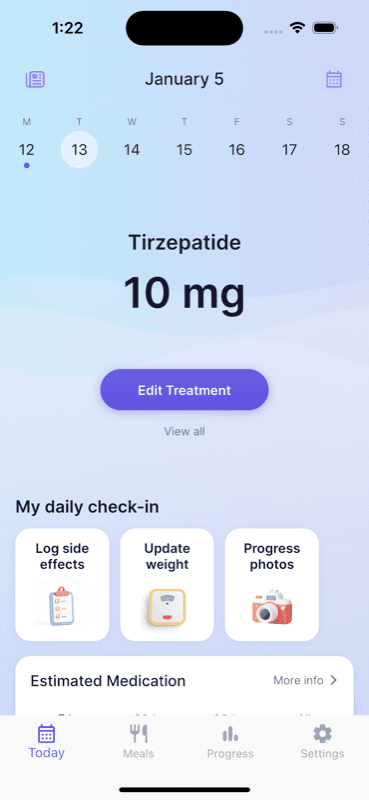
Choose GlucoPal if you use an iPhone and want your injection log, site rotation, symptoms, meals, and weight history in one app. It is free to download and use, with optional GlucoPal Pro features and no account required. The official App Store listing describes dose history, an injection-site rotation map, and reminders. This guide shows what to record and how that workflow fits together.
The tracker should not decide your dose or tell you whether to skip, repeat, or move an injection. Your prescription label and clinician should guide those decisions. The tracker's job is narrower: keep the schedule, site history, dose log, and symptom notes clear enough to review.
Quick answer: The best GLP-1 injection tracker logs the medication, dose, injection date, injection site, missed-dose notes, and symptoms in one timeline. It should make site rotation visible and keep dose changes next to side effects, so you can bring clearer notes to your healthcare provider.
What is a GLP-1 injection tracker?
A tracker can be a paper log, a calendar, or an app. A calendar may be enough if you only need a recurring reminder. GlucoPal fits when you also want to review the actual dose and injection site alongside the rest of your GLP-1 routine.
A GLP-1 injection tracker is a medication log built around recurring injection habits: the next scheduled dose, the last dose taken, the exact injection site, and any symptoms that followed. It is useful because many GLP-1 routines are weekly, which makes them easy to remember in theory and surprisingly easy to mix up in real life.
In the US, common injectable weight-loss routines include semaglutide products such as Wegovy and related incretin medications such as tirzepatide products. Some people also use Ozempic or Mounjaro under clinician guidance when medication choice overlaps with diabetes-labeled products. Labels differ by medication, dose, and indication, so the tracker should mirror the instructions on your own prescription.
A good tracker is not just a calendar reminder. If you are still comparing options, our overview of what to look for in a GLP-1 tracker app walks through the features that matter most. It answers four practical questions:
| Tracking field | Why it matters | Useful example |
|---|---|---|
| Medication and dose | Keeps titration history separate from current dose | "Wegovy 0.5 mg" or "Zepbound 5 mg" |
| Injection date and time | Shows whether doses are staying on schedule | "Sunday, 8:15 p.m." |
| Exact site | Helps avoid repeating the same small area | "Lower left abdomen, 2+ inches from navel" |
| Symptoms and skin notes | Makes patterns easier to discuss | "Mild nausea Monday; small red spot for 1 day" |
GlucoPal's medication timeline keeps dose history and injection logs together, which is helpful when a dose increase and a symptom change happen in the same month.
How to log a GLP-1 injection in GlucoPal
Start with the dose you actually took, following your prescription. GlucoPal records that event; it does not choose the dose for you.
- Check the date and time. Use the actual injection date and time, including when you are adding an earlier dose.
- Record the medication and dose. Check that the saved values match what you took. Keep later dose changes as dated entries so the history remains useful.
- Select the injection site. The site map and previous entries help you review where you injected. Follow your medication instructions and your clinician's rotation guidance.
- Save the dose and review the history. When you later record symptoms, meals, or weight, compare their dates with the treatment log. Timing can help you describe a pattern without establishing its cause.
| In GlucoPal | What the record helps you answer |
|---|---|
| Medication, dose, date, and time | What did I take, and when did I take it? |
| Injection-site map and history | Where did I record the last injection? |
| Dated symptom entries and notes | What did I notice during the following days? |
| Weight and meal records | What else changed in my routine over the same period? |
For example, you might save a Sunday injection, add a Monday symptom note, and review both before an appointment. This is an illustration of a logging workflow, not a suggested medication schedule. Our side-effect logging guide explains how symptom tags and notes work; meal tracking in GlucoPal covers food entries and daily totals.
What should you log after each GLP-1 injection?
Log the dose, date, exact site, and any symptoms while the details are fresh. A short note right after the injection is usually more useful than a long reconstruction several weeks later.
For injection schedules, record the day you actually took the dose, not just the day you planned to take it. Wegovy and Ozempic labels describe once-weekly injection schedules, and tirzepatide products such as Zepbound and Mounjaro are also administered once weekly. If your clinician changes your medication, dose, or timing, your tracker should show the old routine and the new one instead of overwriting history.
For injection sites, be more specific than "stomach" or "leg." Write "upper right abdomen," "left thigh," or "back of right upper arm with help." Specific site names matter because official instructions for several products tell patients to rotate injection sites and avoid using the same exact spot repeatedly.
For symptoms, use plain language and timing. "Nausea the next morning" is more useful than "felt bad." "Tender red bump at right thigh for two days" is more useful than "site reaction." Do not use the log to self-diagnose. Use it to create a clearer record for your clinician, especially if symptoms are severe, persistent, unusual, or getting worse.
GlucoPal's symptom journal lets you log side effects next to dose changes, so appointment notes do not have to depend on memory. If symptoms are your main concern, our guide to logging GLP-1 side effects and knowing when to call covers what to record and which warning signs should not wait.
If you want to explore how estimated medication levels build between regular doses, try the free GLP-1 half-life calculator. It shows a chart and table without an account. If your prescription uses a compounded vial and a U-100 syringe, the mg-to-units calculator converts the dose your prescriber has already set using your vial’s concentration; it does not choose a dose.
How should a tracker handle injection site rotation?
A tracker should make the last site obvious before you choose the next one. That is the practical core of injection site rotation: seeing where you injected last time and selecting a different exact spot this time.
FDA label language for several injectable GLP-1 or related incretin medications names the abdomen, thigh, and upper arm as subcutaneous injection areas. Product instructions vary in details, but labels commonly tell patients to rotate sites and avoid irritated, bruised, hard, scarred, or damaged skin. Wegovy instructions also note keeping lower-stomach injections at least 2 inches from the belly button.
You do not need a complicated rotation map to benefit from tracking. A simple pattern can work:
| Week | Site note to log | Before next dose, check |
|---|---|---|
| 1 | Upper right abdomen | Was there redness, tenderness, or bruising? |
| 2 | Lower right abdomen | Did symptoms differ from week 1? |
| 3 | Lower left abdomen | Is any prior site still irritated? |
| 4 | Upper left abdomen | Which area has had the longest break? |
If your medication instructions allow the abdomen, thigh, or upper arm, your clinician can help you choose which sites are practical for you. The back of the upper arm may be hard to use alone, and some labels describe another person giving injections there. For a deeper site-specific rotation example, see our guide to Zepbound injection site rotation.
GlucoPal's injection site body map shows where you last injected, which makes rotation easier to keep consistent without turning every shot into a memory test.
How can dose logs and symptom patterns help?
Dose logs help separate "what changed" from "what happened." If nausea, constipation, appetite changes, fatigue, or injection-site irritation appears around the same time as a dose increase, a missed dose, a schedule change, or a new injection site, your notes can make that sequence easier to review.
This does not mean the tracker proves what caused a symptom. GLP-1 side effects can be affected by dose, timing, meals, hydration, other medicines, and individual response. A tracker is a pattern-finding aid, not a diagnosis tool.
A useful weekly review looks for simple signals:
| Pattern to review | What to look for in the log | Why it is useful |
|---|---|---|
| Dose changes | Symptoms after each titration step | Helps frame questions for your prescriber |
| Site reactions | Redness, swelling, lumps, bruising, tenderness | Shows whether one area keeps reacting |
| Schedule drift | Doses taken late, early, or missed | Helps keep the actual routine visible |
| Meal and hydration context | Symptoms after heavier meals or low-fluid days | Adds context without guessing at a cause |
Contact your healthcare provider promptly for severe or persistent gastrointestinal symptoms, symptoms of dehydration, allergic-type symptoms, or injection-site reactions that are spreading, painful, or concerning. For urgent symptoms, seek urgent medical care instead of waiting to update a tracker.
If you want one place for the routine, GlucoPal can track weekly injections, site history, dose changes, weight progress, nutrition habits, and symptom notes. It is available on the App Store for iPhone.
FAQ
Can I track GLP-1 injections on my iPhone with GlucoPal?
Yes. GlucoPal records your medication, dose, date, time, and injection site, with dose history and a site-rotation map. It also supports symptom notes, meal records, and weight tracking. It is free to download and use, with optional Pro features and no account required. Follow your prescription for treatment decisions.
Can I use the same general injection area every week?
Often, yes, if your medication instructions allow it and you choose a different exact spot within that area. For example, Wegovy instructions say you may use the same body area each week but should not use the same spot each time. Follow the instructions for your specific medication.
Should my GLP-1 injection tracker remind me about missed doses?
It should at least show the last dose taken and the next planned dose. Missed-dose rules differ by medication, so use the official instructions for your prescription or ask your clinician instead of relying on a generic rule.
What symptoms should I track after a GLP-1 injection?
Track symptoms that affect your day or repeat over time, such as nausea, vomiting, diarrhea, constipation, reflux, fatigue, appetite changes, and injection-site redness, swelling, pain, lumps, bruising, or itching. Seek medical guidance for severe, persistent, or unusual symptoms.
Is a GLP-1 injection tracker medical advice?
No. A tracker is a personal record. It can help you follow the routine you were prescribed and prepare better notes, but it should not replace your clinician's advice about dose changes, missed doses, side effects, or injection technique.
Sources
- DailyMed - Wegovy prescribing information - FDA label language on weekly semaglutide injection, injection areas, site rotation, and similar exposure across abdomen, thigh, and upper arm
- DailyMed - Ozempic prescribing information - FDA label language on once-weekly dosing, abdomen/thigh/upper-arm injection, site changes within the same body region, missed-dose timing, and GI warning language
- DailyMed - Zepbound prescribing information - FDA label instructions on weekly tirzepatide injection, rotating within the chosen area, avoiding damaged or irritated skin, and not using the same site as other medicines
- DailyMed - Mounjaro prescribing information - FDA label language on once-weekly tirzepatide injection, abdomen/thigh/upper-arm injection areas, and rotating injection sites
- FDA - Concerns with unapproved GLP-1 drugs used for weight loss - FDA safety context on unapproved GLP-1 products, reported injection-site adverse event symptoms, and MedWatch reporting
- GlucoPal on the App Store - Product description for iPhone availability, injection-site rotation, dose history, reminders, and related tracking features, checked September 11, 2026
Never inject the same site twice.
GlucoPal rotates injection sites for you, logs every dose, and keeps your Zepbound, Wegovy, or Mounjaro routine on track.
Get GlucoPal — FreeFree · No account required · iPhone
Continue reading
All articlesHow to Manage GLP-1 Nausea (and What to Track)
GLP-1 nausea is common, usually peaks around dose increases, and often eases with time. Here is why it happens, how to ease it, and when to call a doctor.
Read articleMedication TrackingGLP-1 Side Effect Tracker: What to Log and When to Call
Log GLP-1 symptoms, appetite changes, injection-site reactions, and notes in GlucoPal on iPhone, then review them alongside your dose history.
Read articleApp ComparisonsMyFitnessPal GLP-1 Support vs GlucoPal: Should You Just Use MyFitnessPal? (2026)
MyFitnessPal GLP-1 Support vs GlucoPal compared on dose logging, injection sites, side effects, food tracking, exports, and price, checked against primary sources.
Read article