Protein Goals on GLP-1: How to Track Enough Without Guessing
Learn how to discuss protein goals on GLP-1 treatment, why appetite changes make tracking useful, and how AI meal scanning can help with practical nutrition logs.
A note from the editors. This article is for informational purposes only and does not constitute medical advice. Always consult your physician or qualified health provider before making changes to your medication or treatment plan.
Protein goals on GLP-1 should be treated as a range to personalize with your clinician or registered dietitian, not a number copied from a calculator. GLP-1 medicines can make eating less feel natural, but eating less can also make protein, fluids, fiber, and micronutrients easier to miss.
For many people taking Wegovy, Zepbound, Mounjaro, Ozempic, or another GLP-1 medication for weight loss, the useful question is not "What is the highest protein target I can hit?" It is "What protein range supports my treatment plan, symptoms, kidney health, activity level, and appetite right now?"
Quick answer: Start with your prescriber's nutrition guidance, then ask whether your daily protein goal should be based on current weight, goal weight, ideal body weight, lean body mass, or a simpler grams-per-day range. Track enough meals to see the pattern. If manual logging is the part you skip, GlucoPal's AI meal scanning can estimate protein and calories from a meal photo so you have a starting point to review.
Protein goals on GLP-1 should be personalized, not copied from the internet
The safest way to set protein goals on GLP-1 is to ask your clinician or dietitian which calculation method fits your body, medical history, and weight-loss phase.
The adult protein RDA in the Dietary Reference Intakes is 0.8 grams per kilogram per day, and the adult acceptable macronutrient distribution range for protein is 10% to 35% of calories. Those are population reference values, not a complete GLP-1 nutrition plan. During active weight loss, some clinicians discuss higher protein strategies to help preserve lean mass, but the right target depends on factors such as age, kidney function, total calories, activity, strength training, food tolerance, and whether body composition data is available.
Use this table to make the conversation more concrete:
| Protein planning approach | What it means | Why to discuss it first |
|---|---|---|
| RDA baseline | Uses the adult reference value of 0.8 g/kg/day | Good for understanding the floor, but it may not match active weight-loss needs |
| Grams-per-day range | A clinician gives a practical daily range, such as a minimum and stretch goal | Easier to follow when appetite changes from week to week |
| Goal-weight or reference-weight method | Calculates protein from a target or reference body weight | May be more realistic for people with higher starting body weight |
| Lean-body-mass method | Uses measured fat-free mass when body composition data is available | More individualized, but it requires a reliable measurement |
| Meal-distribution method | Splits protein across meals and snacks | Often easier than trying to fit most protein into one large dinner |
The point is not to turn protein into another source of pressure. The point is to agree on a target range that makes clinical sense before you start optimizing your grocery list.
Track protein because GLP-1 appetite changes can hide under-eating
Protein tracking is useful on GLP-1 because reduced appetite can make low intake look like "doing well" until fatigue, skipped meals, constipation, or poor recovery shows up.
DailyMed labels for medications such as Wegovy describe use alongside diet and increased physical activity, and common gastrointestinal side effects can include nausea, vomiting, diarrhea, constipation, abdominal pain, dyspepsia, and fatigue. That combination matters: if your appetite is low and symptoms make food less appealing, memory alone may overestimate what you ate. Keeping a record of side effects beside your dose timing can show whether nausea or fullness is the reason protein dropped in a given week.
A practical protein log does not need to be perfect. It should answer a few questions:
- Did I get protein at breakfast or did the day start with coffee only?
- Did nausea, reflux, constipation, or fullness change what I could tolerate?
- Did I rely on one large protein meal or spread intake across the day?
- Did my protein trend drop during a dose increase?
- Did I also get fluids, fiber-rich foods, and enough overall calories?
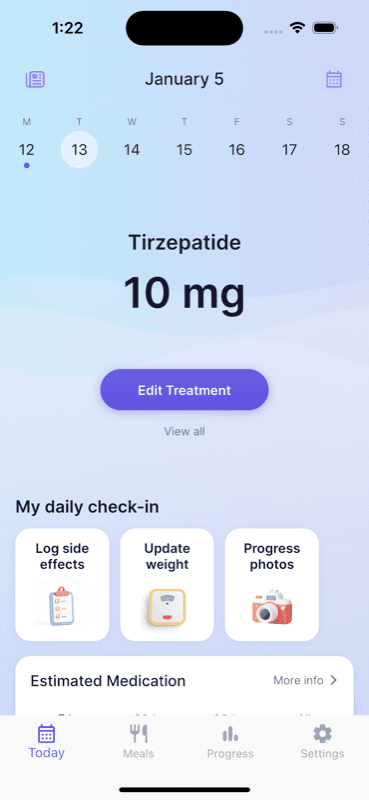
GlucoPal feature moment: GlucoPal lets you keep protein, calories, water, symptoms, dose history, and weight trends in the same routine, so a low-protein week is easier to see beside the treatment context.
Build meals around protein without crowding out the rest of the diet
A good GLP-1 protein plan should make meals more nutrient-dense, not turn every meal into a shake, bar, or single macro target.
MedlinePlus' summary of the 2025-2030 Dietary Guidelines lists protein foods such as meat, poultry, seafood, beans and peas, eggs, soy foods, nuts, nut butters, and seeds. The same summary advises choosing lean meats, including seafood during the week, and substituting peas, lentils, beans, or soy in place of meat at least some of the time.
On GLP-1 treatment, smaller meals can make the order of eating matter. If you fill up quickly, it may help to put the protein source on the plate intentionally, then add vegetables, fruit, whole grains or starchy vegetables when tolerated, healthy fats, and fluids according to your care team's guidance.
| If this happens | A tracking-friendly adjustment to discuss |
|---|---|
| You skip breakfast because you are not hungry | Try logging a small protein-containing option if your clinician wants morning intake |
| Dinner is the only high-protein meal | Split protein across lunch, dinner, and a snack so one meal is not doing all the work |
| Meat feels unappealing after a dose increase | Rotate in eggs, Greek-style yogurt, tofu, lentils, beans, fish, or other tolerated options |
| You hit protein but miss fiber and fluids | Track water and fiber-rich foods alongside protein instead of treating protein as the whole plan |
| Nausea changes your usual meals | Use symptom notes to separate "I forgot" from "I could not tolerate that food this week" |
If you have kidney disease, a history of eating disorder symptoms, recent bariatric surgery, pregnancy, complex diabetes medication changes, or other medical conditions, do not set protein targets on your own. Ask for individualized nutrition advice.
AI meal scanning helps when consistency matters more than perfect numbers
AI meal scanning is most useful as a consistency tool: it gives you a reasonable starting estimate when manual food logging feels too tedious.
That distinction matters. A photo estimate is not a lab value, and it should not override your dietitian's plan. But it can be enough to reveal the pattern you actually need: breakfast is low protein, lunch is inconsistent, dinner is doing most of the work, or a dose-change week led to several under-fueled days.
GlucoPal feature moment: GlucoPal's AI meal scanning can estimate protein and calories from a meal photo, and the meal database can help with quick repeat entries. That makes tracking easier on the days when you would otherwise leave the log blank.
For better meal-scan notes:
- Add obvious portions when the photo is hard to judge.
- Correct the estimate if you know the brand, recipe, or serving size.
- Log protein drinks or snacks that are not visible in meal photos.
- Review weekly patterns instead of treating one estimate as exact.
- Bring trend notes to your dietitian if your target feels hard to reach.
If you already use a general calorie app, a GLP-1-specific tracker app can still be useful because protein patterns make more sense when they sit next to dose timing, symptoms, weight trends, and appetite changes.
Bring protein trends to visits instead of trying to self-adjust
Protein tracking is most valuable when it improves the clinical conversation: what you could eat, what symptoms got in the way, and whether your current goal is realistic.
Before a follow-up visit, look for simple patterns:
| Trend to review | Why it may matter |
|---|---|
| Protein drops after each dose increase | Your team may suggest meal timing, food texture changes, or symptom management, and a clear log of each dose and injection date makes the timing easy to share |
| Weight changes quickly while protein is inconsistent | Your clinician may want to review overall nutrition and strength training |
| Protein is high but calories are very low | You may need a broader nutrition plan, not just more protein |
| Constipation appears during low-fluid weeks | Hydration, fiber, medication side effects, and meal volume may all be relevant |
| Strength training is absent | Protein and resistance exercise often need to be discussed together for lean-mass preservation |
The 2025 joint advisory from major lifestyle, nutrition, and obesity organizations highlights nutrition counseling, prevention of nutrient deficiencies, and preserving muscle and bone mass as priorities during GLP-1 therapy. That is the right frame for your log: use it to support care, not to practice nutrition math in isolation.
Soft CTA: If you want protein, calories, water, meal photos, symptoms, dose history, and weight trends in one GLP-1-focused place, you can review GlucoPal on the App Store before your next logging reset.
FAQ
How much protein should I eat on GLP-1?
Ask your clinician or registered dietitian for a target range. Adult reference values include an RDA of 0.8 g/kg/day, but people using GLP-1 medications during weight loss may need a more individualized plan based on medical history, body size, activity, kidney function, appetite, and treatment goals.
Should I use current weight, goal weight, or lean body mass for protein?
There is no single method that fits everyone. Some care teams use current weight, some use goal or reference weight, and some use lean body mass when reliable body composition data is available. Ask which method your clinician wants you to follow before you build a daily target.
Can AI meal scanning replace a dietitian?
No. AI meal scanning can make logging easier, but it is not medical nutrition therapy. Use it to create a practical food record, then review patterns with your clinician or dietitian.
Is protein the only nutrition goal that matters on GLP-1?
No. Protein matters, but so do total energy intake, fluids, fiber, micronutrients, food tolerance, medication side effects, physical activity, and your relationship with food. A high-protein day is not automatically a well-balanced day.
What should I track if I do not want to count every gram?
Track a simple protein source at each meal, water, symptoms, and whether you met the range your clinician gave you. A few consistent signals are usually more useful than a detailed log you abandon after three days.
Sources
- AHRQ/NCBI Bookshelf - Evaluation of Dietary Protein and Amino Acid Requirements: A Systematic Review - 2024 review summarizing adult protein DRI reference values, including RDA and AMDR context.
- Nutritional priorities to support GLP-1 therapy for obesity - PubMed - 2025 joint advisory from ACLM, ASN, OMA, and The Obesity Society on nutrition and lifestyle priorities during GLP-1 therapy.
- DailyMed - Wegovy Prescribing Information - FDA label details on GLP-1 use with diet and physical activity, dosing context, and common gastrointestinal adverse reactions.
- MedlinePlus - Dietary Guidelines for Americans 2025-2030 - NIH patient-facing summary of current dietary guideline food groups, protein food examples, and advice to discuss dietary changes with a clinician or registered dietitian.
- CDC - Adult Activity: An Overview - current US physical activity guidance including muscle-strengthening activity on 2 or more days per week.
- App Store - GlucoPal - current App Store listing used for iPhone availability and nutrition tracking feature descriptions.
Hit your protein goal every GLP-1 day.
GlucoPal logs meals alongside your Zepbound, Wegovy, or Mounjaro doses so you can spot what fuels your best weeks.
Get GlucoPal — FreeFree · No account required · iPhone
Continue reading
All articlesGLP-1 Foods to Avoid: What Slows Progress and Worsens Side Effects
The foods most likely to worsen nausea, reflux, and bloating on GLP-1 medications, why they feel worse, and how to find your own triggers instead of guessing.
Read articleApp ComparisonsMyFitnessPal GLP-1 Support vs GlucoPal: Should You Just Use MyFitnessPal? (2026)
MyFitnessPal GLP-1 Support vs GlucoPal compared on dose logging, injection sites, side effects, food tracking, exports, and price, checked against primary sources.
Read articleApp ComparisonsNoom GLP-1 vs GlucoPal: Program or Tracker? (2026)
Noom GLP-1 vs GlucoPal compared: Noom Med is a telehealth program, GlucoPal is the daily record. Tracking, exports, medication coverage, and pricing.
Read article