GLP-1 Weight Loss Calculator
What did people actually lose on Zepbound, Mounjaro, Wegovy, and Foundayo? This calculator maps the averages from the pivotal clinical trials onto your starting weight, dose, and timeline. Real trial data, not marketing numbers.
From the SURMOUNT, STEP, OASIS and ATTAIN trials · Free, no sign-up
Your details
GLP-1 weight loss chart
SURMOUNT-1 average, mapped to your starting weight
−00−46lb
20.9% of body weight
220 lb 174 lb
Out of 100 people on 15 mg
A trial average is not a prediction. Weeks between trial timepoints are estimated. Source: SURMOUNT-1, Jastreboff et al., NEJM 2022
See your real curve
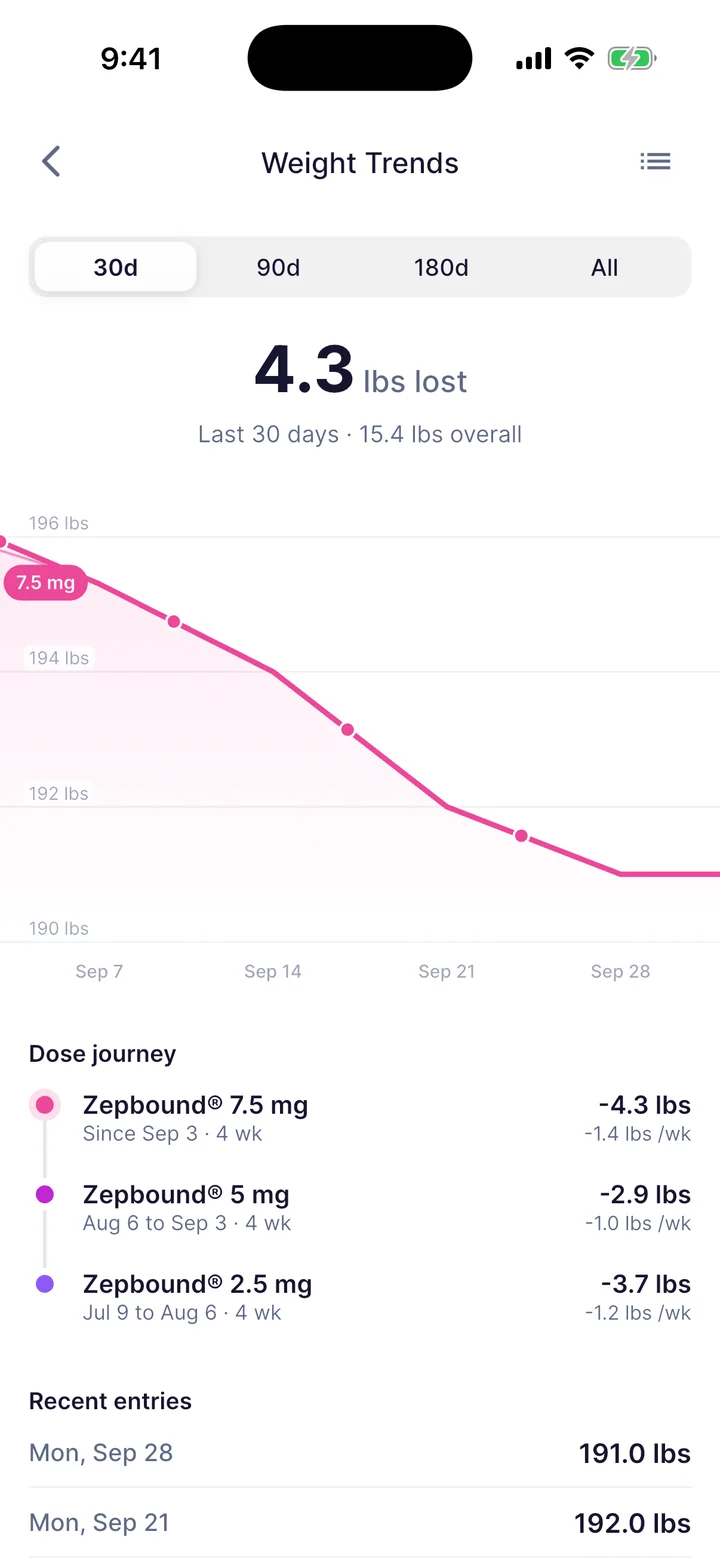
Log weigh-ins and doses, and GlucoPal charts your weight trend by dose.

Quick answer: In the pivotal trials, adults lost an average of 15.0% to 20.9% of body weight on tirzepatide (Zepbound, Mounjaro) over 72 weeks depending on dose, and 14.9% on Wegovy 2.4 mg over 68 weeks, alongside diet and exercise, and 7.4% to 11.1% on the Foundayo daily pill (orforglipron) over 72 weeks.
Educational reference only, not medical advice and not a prediction of individual results. Trial participants used the medication alongside a reduced-calorie diet and increased activity. Talk to your prescriber about what to expect for you.
How the four medications compare
Every arm from the three pivotal trials in one table. Read it as three published averages sitting next to each other, not as a race: SURMOUNT-1, STEP 1, and ATTAIN-1 were separate studies with different durations, different populations, and different comparison groups. The responder columns matter as much as the averages, because they show how wide the spread is around each one.
| Medication and dose | Trial | At 1 year | At trial end | Lost ≥10% | Lost ≥20% |
|---|---|---|---|---|---|
| Zepbound / Mounjaro 5 mg | SURMOUNT-1 (72 wk) | −14.4% | −15.0% | 68.5% | 30.0% |
| Zepbound / Mounjaro 10 mg | SURMOUNT-1 (72 wk) | −18.5% | −19.5% | 78.1% | 50.1% |
| Zepbound / Mounjaro 15 mg | SURMOUNT-1 (72 wk) | −19.8% | −20.9% | 83.5% | 56.7% |
| Wegovy 2.4 mg | STEP 1 (68 wk) | −14.5% | −14.9% | 66.1% | 30.2% |
| Wegovy HD 7.2 mg | STEP UP (72 wk) | −17.8% | −18.8% | 79.8% | 45.5% |
| Wegovy 25 mg tablet | OASIS-4 (64 wk) | −13.5% | −13.6% | 59.8% | 27.9% |
| Foundayo 5.5 mg | ATTAIN-1 (72 wk) | −7.1% | −7.4% | 32.5% | 5.9% |
| Foundayo 9 mg | ATTAIN-1 (72 wk) | −7.9% | −8.3% | 39.8% | 8.9% |
| Foundayo 17.2 mg | ATTAIN-1 (72 wk) | −10.6% | −11.1% | 54.5% | 18.4% |
Trial-end and responder columns are published numbers, using the conservative regulator-signed estimands. The one-year column is estimated from the published curve shape, because the trials report week-by-week values only as figures. These are three separate trials with different durations and populations, not a head-to-head comparison.
Diet and exercise alone averaged 3.1% in SURMOUNT-1, 2.4% in STEP 1, and 2.1% in ATTAIN-1 over the same periods, which is the baseline every one of these numbers should be read against. Average baseline weight was around 231 lb in SURMOUNT-1, 232 lb in STEP 1, and 228 lb in ATTAIN-1.
Go deeper on your medication
Each medication has its own dose schedule, its own naming quirks, and its own reasons why your early months will look slower than the headline number. These pages open the calculator already set to that medication and answer the questions specific to it.
- Zepbound calculatorTirzepatide in the US. 20.9% average on 15 mg, plus the escalation schedule that shapes your first months.
- Mounjaro calculatorThe same tirzepatide data in kilograms for the UK and Australia, including what to make of 7.5 mg and 12.5 mg.
- Wegovy calculatorSemaglutide 2.4 mg, 14.9% average over 68 weeks, plus the 7.2 mg dose and the tablet.
- Foundayo calculatorThe daily orforglipron pill, and why your bottle says 17.2 mg when the news said 36 mg.
- GLP-1 pill calculatorDeciding between the two approved pills? Foundayo and the Wegovy tablet, compared.
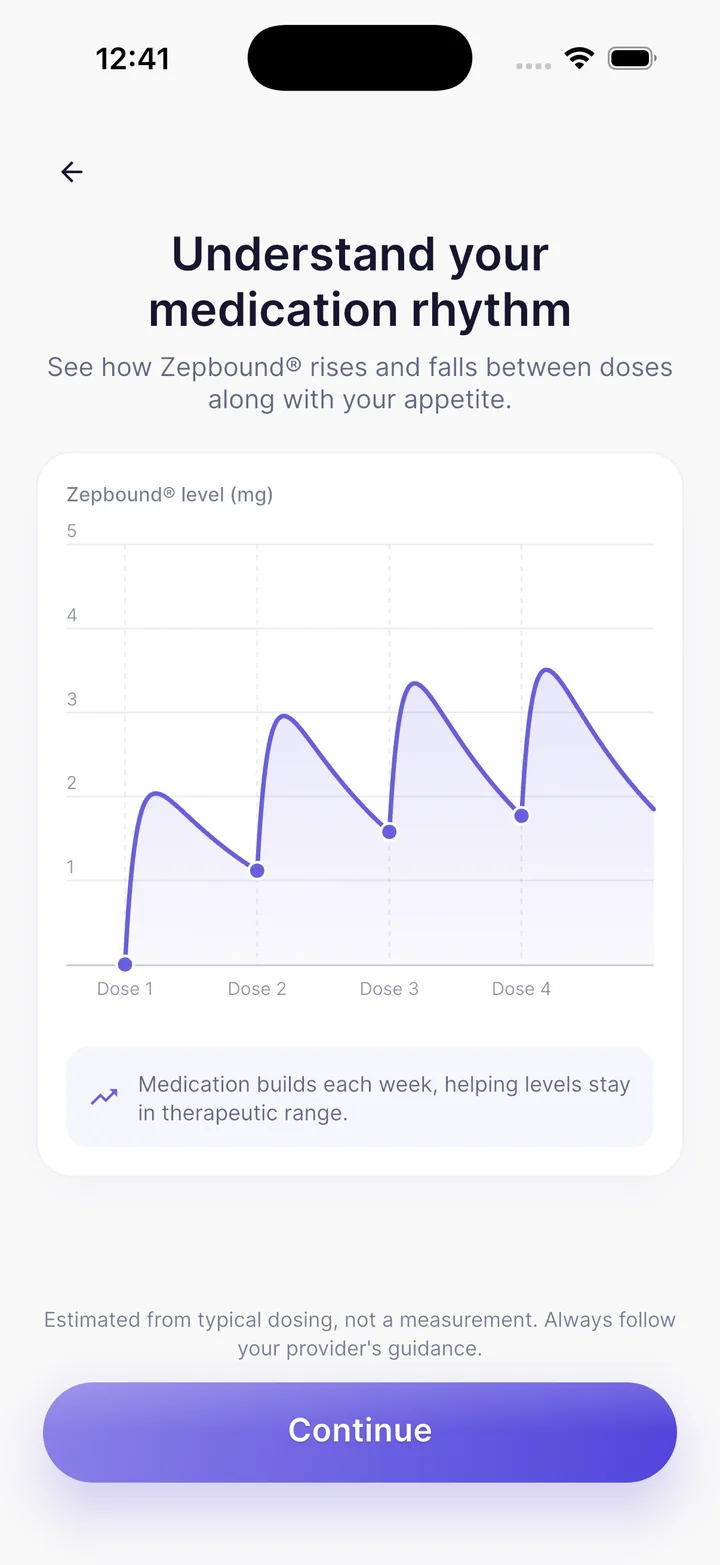
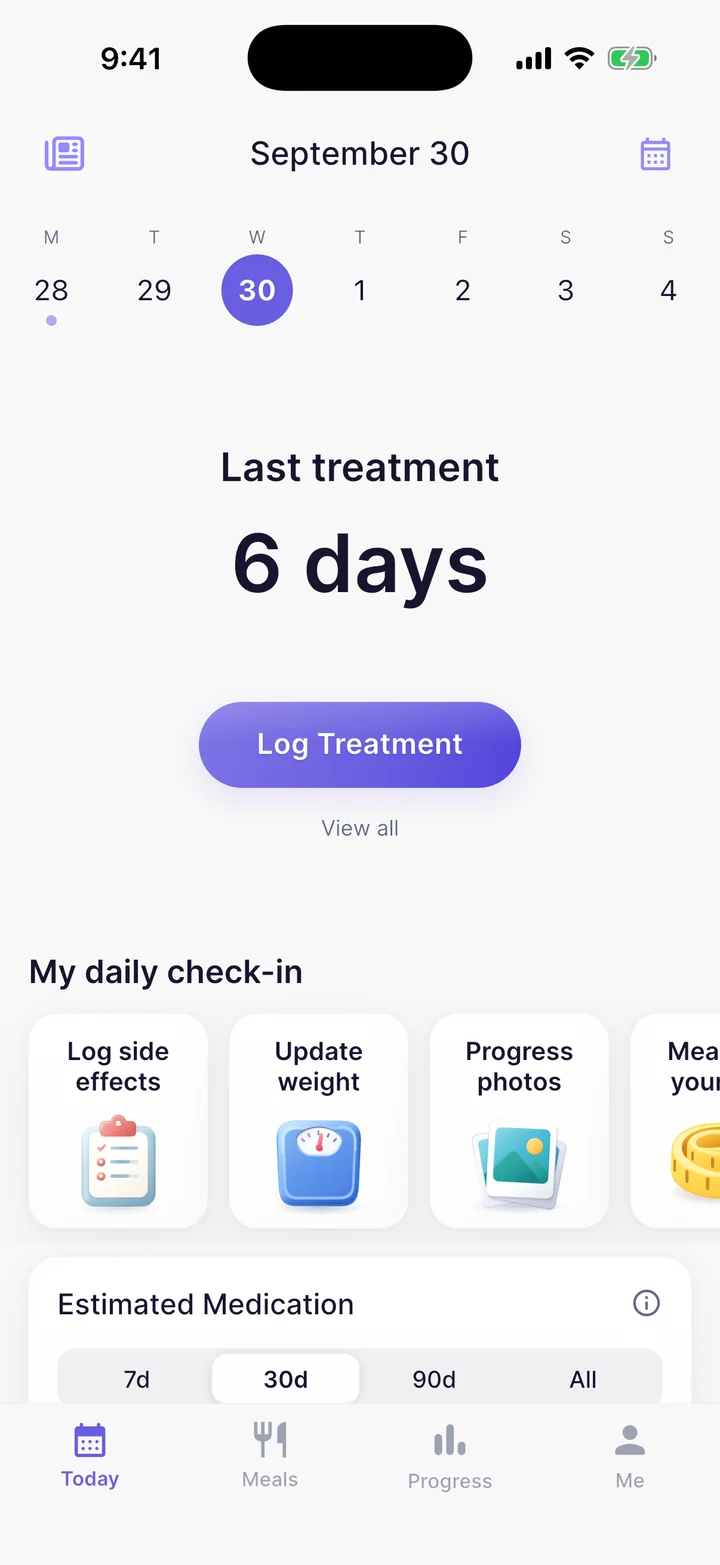
Tracking your own curve against these averages is what GlucoPal is built for; our tracker app comparison covers the alternatives.
Why an average is not a prediction
Three things make trial averages a reference point rather than a promise. First, the spread is wide: in both trials some participants lost more than 20% of their body weight while others lost less than 5%, on the same dose. Second, trial participants received the medication alongside a structured reduced-calorie diet and exercise program, so the numbers reflect medication plus lifestyle change, not medication alone. Third, trial populations (average starting weight around 231 lb, BMI 30+, no diabetes) may not match your situation.
A note on the curves themselves: the trials publish their week-by-week trajectories only as figures, not as numeric tables. The published numbers are the endpoints (week 72 and week 68), a handful of intermediate anchors in FDA review documents, and the shape statements in the papers. Our calculator draws a standard saturating weight-loss curve through those verified points, hits each published endpoint exactly, and labels everything in between as modeled. The regulator-signed conservative estimands are used throughout, not the higher numbers from press releases.
Slow start? A SURMOUNT-1 follow-up analysis found that 18% of participants had lost less than 5% at week 12, and 90% of that group still went on to reach at least 5% by week 72; true non-response by the end of the trial was under 2%. Early weeks, when doses are still escalating, are a poor predictor of where you end up.
The honest way to use these curves: treat them as a landmark, then watch your own trend. Weekly weigh-ins under the same conditions, logged next to your doses, meals, and side effects, tell you and your clinician far more than any single comparison to a trial average. That record is exactly what GlucoPal is built for, including a side-effect log tied to your dose timeline and a doctor-ready export for appointments. If your trend has genuinely stalled, that is a conversation for your prescriber, not a reason to change anything on your own.
FAQ
Which GLP-1 medication gives the most weight loss?
On published trial averages, tirzepatide is the largest: 20.9% on Zepbound or Mounjaro 15 mg over 72 weeks in SURMOUNT-1, against 14.9% on Wegovy 2.4 mg over 68 weeks in STEP 1 and 11.1% on the Foundayo 17.2 mg daily pill over 72 weeks in ATTAIN-1. Those are separate trials with different durations, populations, and comparison groups, so that ranking is three published averages side by side.
For the tirzepatide versus semaglutide question specifically there is a real head-to-head: in SURMOUNT-5, 751 adults were randomised to one or the other for 72 weeks, and tirzepatide averaged 20.2% against semaglutide's 13.7%, though that trial predates the 7.2 mg Wegovy HD dose and capped its semaglutide arm at 2.4 mg.
The spread within any one medication is wider than the gap between them: on Zepbound 15 mg, 90.9% of participants lost at least 5% while 56.7% lost at least 20%. Tolerability, cost, coverage, availability, and whether you are willing to inject weekly all matter alongside the average, and that is a decision for you and your prescriber.
How much weight will I lose in a year on a GLP-1?
Estimated one-year figures from the published curve shapes: about 19.8% on tirzepatide 15 mg and 14.5% on Wegovy 2.4 mg. Most of the first year's loss is banked by around month nine, because the curves are steepest through months 3 to 9 and flatten after that. The one-year values are interpolated rather than published, because the trials report week-by-week values only as figures. For medication-specific answers by month, use the dedicated Zepbound, Mounjaro, Wegovy, and Foundayo calculator pages.
How fast does weight loss happen on GLP-1 medications?
Trial curves show steady, gradual loss rather than a sudden drop: a few percent of body weight in the first 4 to 12 weeks while doses are still escalating, the fastest loss through months 3 to 9, and a gradual flattening toward a plateau in the second year. Use the calculator above to see the curve for your medication and dose.
Is this calculator a prediction of my results?
No. It maps published clinical-trial averages onto your starting weight so you have a realistic reference point. Trial participants received the medication alongside a reduced-calorie diet and increased physical activity, and results varied widely between individuals. The calculator is educational and is not medical advice; talk to your prescriber about what to expect for you.
What if I am losing more slowly than the trial average?
Averages hide a wide spread, and a slow start is common: in a SURMOUNT-1 follow-up analysis, 18% of participants had lost less than 5% at week 12, yet 90% of that group still reached at least 5% loss by week 72. What matters clinically is your own trend over weeks, not any single week. Tracking your weight, doses, meals, and side effects in one place gives you and your clinician the picture needed to decide whether anything should change, and GlucoPal builds that record with a doctor-ready export.
Can I use this calculator for Mounjaro, Ozempic, or compounded GLP-1s?
Mounjaro, yes: it is the same molecule as Zepbound (tirzepatide), so the SURMOUNT-1 curves apply; pick Mounjaro in the calculator. Ozempic and Rybelsus, no: they are semaglutide at lower doses and are not FDA-approved for weight loss, so there is no pivotal weight-loss trial at those doses. Wegovy 2.4 mg is the studied weight-loss dose of semaglutide and the closest published reference. Compounded GLP-1s have no pivotal trials of their own, so there is no published curve to model for them.
Does this cover Wegovy HD and the Wegovy pill?
Yes, both. Pick Wegovy in the calculator and the dose row offers all three forms. Wegovy HD is semaglutide 7.2 mg, approved 19 March 2026 as a separate brand rather than as a dose added to the Wegovy label, and averaged 18.8% over 72 weeks in STEP UP. The Wegovy 25 mg tablet, approved 22 December 2025 as the first oral GLP-1 for weight management, averaged 13.6% over 64 weeks in OASIS-4. Because each form has its own trial, of its own length and against its own control group, the calculator switches trial as well as curve when you change form.
Is this calculator free, and do I need to sign up?
Yes, it is free, and no sign-up or email is required. You see the full result instantly: the trial average for your starting weight, the month-by-month curve, and the responder milestones for every medication. The GlucoPal iOS app it comes from is also free to download.
Sources
- Tirzepatide Once Weekly for the Treatment of Obesity (SURMOUNT-1), NEJM 2022
- Once-Weekly Semaglutide in Adults with Overweight or Obesity (STEP 1), NEJM 2021
- Aronne et al., Tirzepatide as Compared with Semaglutide for the Treatment of Obesity (SURMOUNT-5), NEJM 2025
- Wharton et al., Once-weekly semaglutide 7.2 mg in adults with obesity (STEP UP), Lancet Diabetes & Endocrinology 2025
- Wharton et al., Oral Semaglutide at a Dose of 25 mg in Adults with Overweight or Obesity (OASIS-4), NEJM 2025
- Zepbound Prescribing Information (DailyMed)
- Wegovy Prescribing Information (DailyMed)
- Orforglipron for Obesity Treatment (ATTAIN-1), NEJM 2025
- Foundayo Prescribing Information (DailyMed)
- FDA Statistical Review, NDA 217806 (intermediate week-20 anchors)
- Horn et al. 2025, time to weight plateau in SURMOUNT-1 and SURMOUNT-4
- Ard et al. 2025, early weight loss response in SURMOUNT-1
Built and maintained by GlucoPal, the free app for iPhone and Android for tracking GLP-1 weight loss medications. The GLP-1 Tracker by GlucoPal app is rated 4.8 stars from over 7,000 ratings worldwide and used by 100,000+ people. The same respect for published data powers its estimated medication-level charts. The calculator runs entirely in your browser and stores no health data.
You take your GLP-1s. We'll take care of the rest.