Glapp Alternatives: 5 GLP-1 Trackers Compared
5 verified Glapp alternatives for 2026: GlucoPal, Shotsy, MeAgain, Pep, and DreamMe, with ratings, prices, and features compared.

By GlucoPal TeamReviewed 14 min read
If you are shopping for a Glapp alternative, start with the workflow you want to change. Glapp deliberately focuses on medication behavior, benchmarking, and supply rather than food. GlucoPal is built for people who want the meal and the medication record together.
Quick answer: Choose GlucoPal if you want meal-level nutrition, symptoms, progress photos and an exportable record alongside doses on iPhone or Android. Keep Glapp if clinical-trial benchmarking, vial inventory with BUD dates or browser access is why you track. Android availability is shared; the useful difference is how you organize food, progress and medication inventory.
| Choose GlucoPal if... | Keep Glapp if... |
|---|---|
| You want meals, sites, symptoms and progress together on iPhone or Android, with CSV exports and a Pro provider PDF | Trial benchmarking, vial inventory or web access is your priority |
The historical competitor rating, price and feature snapshot below was checked against primary sources (App Store listings, Google Play listings, Apple's public US customer review feed, and official product sites) on August 14, 2026. App listings change often, so re-check the current listing before you download.
Product correction — October 6, 2026
GlucoPal works on iPhone and Android. It supports food search, barcode and photo entry, fat and fiber, body measurements and side-by-side photos. Standard US Pro is $9.99/month or $34.99/year; discounts, trial terms and feature access can vary, so check the in-app offer. Historical competitor ratings, review samples and other checks retain their stated dates.
What are the best Glapp alternatives in 2026?
The five alternatives at a glance: Shotsy (iPhone, iPad, and Android, 4.84 from 29,363 US ratings), MeAgain (iPhone, iPad, and Android, 4.79 from 28,552 US ratings), GlucoPal (iPhone and Android, 4.81 from 2,589 US ratings), DreamMe (iPhone, iPad, and Android, 4.68 from 2,449 US ratings), and Pep (iPhone and Android, 4.68 from 858 US ratings). Glapp itself remains the baseline at 4.74 from 809 US ratings. Rating figures checked August 14, 2026; GlucoPal product facts corrected October 6.
The five alternatives at a glance
| App | Platforms | Price (GlucoPal: October 6; others: August 14, 2026) | Best for |
|---|---|---|---|
| GlucoPal | iPhone, Android | Free to download and use; optional GlucoPal Pro $9.99/mo or $34.99/yr | Meals, medication and progress together; CSV exports and Pro provider PDF |
| Shotsy | iPhone, iPad, Android | Free to download; in-app purchases $9.99 to $29.99 per item; no price published on shotsyapp.com | Medication records, daily nutrition totals, and PDF export |
| MeAgain | iPhone, iPad, Android | Free to download; in-app purchases $14.99 to $119.99 per item; no price published on meagain.com | An AI companion and lower mental load |
| Pep | iPhone, Android | Free to download; in-app purchases $9.99 to $39.99 per item; no price published on pepglp1.com | A simple, genuinely cross-platform dose log |
| DreamMe | iPhone, iPad, Android | Free to download; in-app purchases $0.99 to $69.99 per item; no price published on dreamme.life | Anyone who has never managed to stick with a tracker |
| Glapp (the baseline) | iPhone, iPad, Android, web | Free to download; in-app purchases $4.99 to $39.99 per item; no pricing page published on glapp.io | Clinical-trial benchmarking and vial supply tracking |
Why people look for a Glapp alternative
Two things send people searching for a Glapp alternative, and only one of them is a complaint.
The first is nutrition, and it is a design decision rather than a gap. Glapp's iOS listing says it is built for people who "deserved better than a generic calorie counter," and its Android listing names MyFitnessPal, Happy Scale, and Noom as the apps you should pair it with. That is unusually candid product marketing. It also means a protein target, a calorie goal, or a water reminder requires a second app, and several recent US reviewers mention exactly that.
The second is the move to Glapp Max, the paid tier Glapp introduced with a blog post on July 8, 2026. It is by far the most repeated theme in Glapp's 49 most recent US App Store reviews, and no other page ranking for this keyword mentions it at all. We break down what actually moved further down.
Neither reason means Glapp is a bad app. It holds a 4.74 average from 809 US App Store ratings and a 4.5 average from 346 Google Play ratings with 10,000+ downloads, after a first iOS release on March 22, 2026. That is a strong five-month start.
How we compared them
We compared these apps on five axes that change day-to-day use: medication coverage (injections, compounded GLP-1s, and oral GLP-1s), injection-site rotation, nutrition depth (whether you log a meal or a number), medication-level estimates, and platform availability. Price is reported, not weighted, because every app here is free to download.
Where a company does not publish a price, we say so rather than guessing. Five of the six apps in this roundup, every competitor here, publish no subscription figure on a pricing page, so Google Play in-app purchase ranges and App Store descriptions are the only primary sources available for those five. GlucoPal is the exception: it states its Pro price ($9.99/mo or $34.99/yr) directly.
We also did not repeat other vendors' characterizations of Glapp. Two competitor comparison pages currently rank for this keyword, and at least one states that Glapp has no injection-site rotation. That is false: both of Glapp's own store listings describe "smart injection site rotation." Every Glapp gap named here is one Glapp's own listings or website confirm, or is phrased as "not described." Reviewing an app's privacy and data-use pages before you download is worth the two minutes, as the FTC's consumer guidance on health apps points out.
For the wider field beyond these six, our GLP-1 tracker app guide covers what to track before a dose regardless of which app you pick.
How do the top Glapp alternatives compare side by side?
Feature summary: All six apps log doses and track injection sites, and all six describe some form of medication-level estimate. They split hardest on nutrition: GlucoPal, MeAgain, Pep, and DreamMe let you log the meal itself by photo or search, Shotsy tracks calorie, protein, and water totals you enter or import from Apple Health, and Glapp does not log food at all by design. On exports, GlucoPal offers CSV exports and Pro provider PDFs and Shotsy offers PDF export, while MeAgain's own site says it lacks PDF export and Glapp describes weekly in-app reports rather than a file.
Full feature comparison
| App | Platforms | US App Store rating (August 14, 2026) | Injection site rotation | Food, protein, water | Medication-level estimates | Oral GLP-1 pills | Data export |
|---|---|---|---|---|---|---|---|
| GlucoPal | iPhone, Android | 4.81 (2,589 ratings) | Yes, automatic body map | Yes, food search, barcode entry, and AI meal photo scanning | Yes (forecast chart, Pro) | Yes (Wegovy pill, Rybelsus, Foundayo) | Yes, CSV exports; provider PDF requires Pro |
| Shotsy | iPhone, iPad, Android | 4.84 (29,363 ratings) | Yes, suggests next site | Calorie, protein, and water totals, entered or imported from Apple Health | Yes | Yes | Yes, PDF export per its site |
| MeAgain | iPhone, iPad, Android | 4.79 (28,552 ratings) | Yes, with site history | Yes, photo, barcode, and search; photo logging is Premium per its own free-tier page | "Medication-level context," per its listing | Yes (Wegovy pill, Foundayo) | No, per its own comparison page |
| DreamMe | iPhone, iPad, Android | 4.68 (2,449 ratings) | Yes, recalls your last site | Yes, AI meal photos estimating protein and fiber | Yes | Not described | Yes, doctor PDF per its own product page (October 6 recheck) |
| Pep | iPhone, Android | 4.68 (858 ratings) | Yes | Yes, AI food scanner | Yes | Yes | Not described on its listings |
| Glapp (the baseline) | iPhone, iPad, Android, web | 4.74 (809 ratings) | Yes, smart site rotation | No food, calorie, protein, or water logging | Yes, semaglutide and tirzepatide curves, free per its own blog | Not described | Not described on its listings |
Site rotation is genuinely universal here, and Glapp is one of only two apps in the roster that describes it as automatic. The nuance worth knowing is that only GlucoPal describes a body-map history you can look back through, which matters if you are following Lilly's instruction to rotate sites with each dose. Side-effect logging is standard across all six, but how it connects to your dose timeline varies, and our guide to tracking GLP-1 side effects explains what to record so the pattern is readable later.
What each one actually costs
Every app in this roundup is free to download, and none of the six publishes a subscription price on a pricing page. Glapp's own site is a clear example: `glapp.io/pricing` is not in its sitemap and renders empty, and its homepage FAQ still describes Glapp as "a free native app." Here is what primary sources say, re-checked August 14, 2026.
| App | Free tier | Paid tier (GlucoPal: October 6; others: August 14, 2026) |
|---|---|---|
| GlucoPal | Free to download and use, no account required | GlucoPal Pro, standard US $9.99/mo or $34.99/yr |
| Shotsy | Free to download | Google Play in-app purchases $9.99 to $29.99 per item; no price published on shotsyapp.com |
| MeAgain | Free to download, with free dose logging and reminders, side effects, barcode and search food logging, protein, fiber, and water targets, weight, activity, and a Capy chat allowance | Google Play in-app purchases $14.99 to $119.99 per item; no price published on meagain.com |
| Pep | Free to download, with a free trial | Google Play in-app purchases $9.99 to $39.99 per item; its App Store description says a membership is required to unlock full access |
| DreamMe | Free to download | Google Play in-app purchases $0.99 to $69.99 per item; no price published on dreamme.life |
| Glapp (the baseline) | Free to download, with shot tracking, weight tracking, supply management, and estimated medication levels free per its own Max post | Google Play in-app purchases $4.99 to $39.99 per item; no pricing page published on glapp.io |
Price opacity is the category norm, not a Glapp quirk. The Google Play ranges are wide and unexplained, from DreamMe's $0.99 to $69.99 per item up to MeAgain's ceiling of $119.99. GlucoPal is the only app here that states its subscription price up front ($9.99/mo or $34.99/yr). If cost is a real constraint, our breakdown of the best free GLP-1 tracker apps goes through what each free tier genuinely includes.
What Glapp Max changed, and what stayed free
Glapp Max is the paid membership Glapp launched with a blog post on July 8, 2026. Per that post, shot tracking, weight tracking, supply management, and estimated medication levels stay free, while Progress Reports, Milestones, and Predictions sit behind Max.
| Free, per Glapp's July 8, 2026 post | Glapp Max, per the same post |
|---|---|
| Shot tracking with dose, timing, and injection site | Progress Reports: weekly auto-generated summaries, weight loss broken down by dosage level, correlated habits and dose adjustments, side-effect patterns, and hunger and food-noise trends |
| Weight tracking | Milestones: achievement cards tied to peer-reviewed research, built with obesity medicine physicians |
| Supply management for vials and pens | Predictions: a personalized goal-date forecast from your logged pace and dosage history, BMI range movement, three- and six-month checkpoints, and a low-supply flag |
| Estimated medication levels, including detailed pharmacokinetic information |
Glapp states plainly that it "made a deliberate choice to treat estimated medication levels as a core feature, not a premium add-on." That is worth crediting, because medication-level projections are the exact feature most competitors gate. GlucoPal's estimated medication-level forecast chart, for instance, is part of the optional GlucoPal Pro subscription.
The tension is in the reception. Glapp's Max announcement says the change "does not take away anything you already rely on" and "does not lock away essential tools," while the single most repeated complaint in its 49 most recent US App Store reviews, appearing in roughly a quarter of them, is that weekly reports, trends, and analysis that had been free became paid, with several reviewers describing blurred panels inside the app. Both are accurately sourced. The fair reading is that Glapp's definition of "essential" (shots, weight, supply, medication levels) is genuinely generous by category standards, and the interpretive layer longtime free users had grown used to is the part that moved.
If logging a meal in the same place you log the shot is what you were missing, GlucoPal includes a searchable meal database and AI meal photo scanning alongside protein, calorie, and water goals, so the food side does not need a second app.
Which Glapp alternative fits your routine?
Fit summary: GlucoPal suits people on iPhone or Android who want doses, sites and meal-level nutrition in one app. CSV exports are available, and Pro adds provider PDFs. Shotsy suits a routine centered on medication records and daily nutrition totals. MeAgain suits people who want an AI companion. Pep suits people who want one simple log on both platforms. DreamMe suits people whose real problem is sticking with tracking at all.
GlucoPal: meals and medication in one record for food and progress
If you are on Zepbound, Mounjaro, Wegovy, or a compounded GLP-1 and you want the dose log, the food log, and something you can hand to your clinician in one place, GlucoPal is built for that. It is designed for the weight-loss journey rather than adapted from a general health app.
GlucoPal is available on iPhone and Android. Its August 14 US rating snapshot was a 4.81 average from 2,589 US App Store ratings. GlucoPal reports 100,000+ users. It is free to download and use, with an optional GlucoPal Pro subscription at $9.99/mo or $34.99/yr.
GlucoPal tracks brand injections, compounded GLP-1s, and daily pills such as the Wegovy pill, Rybelsus, and Foundayo (orforglipron). It logs protein, calories, and water with a meal database and AI meal photo scanning, so most people can drop the separate calorie counter Glapp asks you to keep. It adds automatic injection-site rotation with a body-map history, titration and dose history with reminders, weight trends with weekly averages, side effects tied to the dose timeline, private progress photos, Apple Health on iPhone and Health Connect on Android, Autopilot Calorie Goals, an estimated medication-level forecast chart (Pro), and CSV exports and Pro provider PDFs. Its App Store description lists six languages. No account creation is required to start, and GlucoPal does not sell your health information.
The meaningful difference versus Glapp is specialization: GlucoPal combines meals and medication records, while Glapp emphasizes clinical-trial benchmarking and vial inventory. Both work on iPhone and Android. Our GlucoPal vs Glapp comparison works through that decision feature by feature. If nutrition is the reason you are switching, our guide to hitting protein goals on a GLP-1 shows what that tracking looks like week to week.
Shotsy: medication records and daily nutrition totals
Shotsy is another iPhone and Android option for medication records, daily nutrition totals and PDF export. GlucoPal also works on Android; compare individual meal entry with the daily-total workflow.
Shotsy runs on iPhone, iPad, and Android, holds a 4.84 average from 29,363 US App Store ratings, and shows 100,000+ Android downloads with a 4.7 average from 9,702 ratings. Its Google Play listing shows in-app purchases from $9.99 to $29.99 per item, and it publishes no price on shotsyapp.com.
It offers PDF export for appointments and covers injections and daily pills, injection-site tracking that suggests your next site, estimated medication levels, interactive charts, and side-effect logging.
The main tradeoff versus GlucoPal: nutrition is numbers in, not meals in. Shotsy's listing and site describe logging and charts for calories, protein, and water, with automatic import from Apple Health, and neither describes a searchable food database, AI meal photo logging, or progress photos (checked August 14, 2026). Our Shotsy alternatives roundup goes deeper on that comparison.
MeAgain: the pick if you want an AI companion
If what keeps you logging is encouragement rather than charts, MeAgain is the app in this roundup built around that idea.
MeAgain runs on iPhone, iPad, and Android, holds a 4.79 average from 28,552 US App Store ratings, and shows 50,000+ Android downloads with a 4.6 average from about 2,080 ratings. Google Play lists in-app purchases from $14.99 to $119.99 per item, the highest ceiling in this roster, and no price appears on meagain.com.
Capy, its AI companion, chats with you, appears as a home-screen widget on Premium, and reviewers describe it talking them through side effects rather than just recording them. MeAgain also tracks fiber alongside protein and water, which most GLP-1 apps skip, and supports food logging by photo, barcode, and search.
The main tradeoff versus GlucoPal: MeAgain's own comparison page states it lacks PDF export, and its free-tier page puts photo food logging, Journey Cards, and the Capy widget on Premium. Our MeAgain alternatives roundup covers that split in detail.
Pep: the pick if you want a simple cross-platform dose log
Someone who wants one straightforward log that behaves the same on an iPhone and an Android phone, without a large feature surface to learn, is the right fit for Pep.
To be clear about which app this is: Pep here means "GLP-1 Tracker: Pep" from Shred Apps at pepglp1.com. There is a separate, unrelated app called Pep AI from a different developer.
Pep holds a 4.68 average from 858 US App Store ratings and shows 10,000+ Android downloads with a 4.5 average from 1,790 ratings. It tracks injections and oral pills including Ozempic, Wegovy (pill or injection), Mounjaro, Zepbound, and Rybelsus, plus compounded retatrutide, tirzepatide, and semaglutide, with injection-site rotation, estimated medication levels, reminders for shots, pills, weigh-ins, hydration and meals, weight and body measurements, progress photos, an AI food scanner using FatSecret nutrition data, and support for 10 languages.
The main tradeoff versus GlucoPal: a smaller historical US rating count (858 versus 2,589; August 14 snapshot), no export described on its listings, and an App Store description stating that a membership is required to unlock full access.
DreamMe: the pick if motivation is what you struggle with
If you have downloaded three trackers and abandoned all three by week two, DreamMe is aimed directly at you. A companion fish named Sushi grows as you log shots and build habits, with pearls, missions, and unlockable outfits.
DreamMe runs on iPhone, iPad, and Android, holds a 4.68 average from 2,449 US App Store ratings, and shows 1,000+ Android downloads with a 4.4 average from 272 ratings. The Android build updates less often, last on April 6, 2026, against an August 2026 iOS release. Google Play lists in-app purchases from $0.99 to $69.99 per item, the widest spread here, and dreamme.life publishes no price.
The depth behind the game is real: weekly injection reminders, a shot-day checklist, dose history, site tracking that recalls your last site, AI meal photo logging that estimates protein and fiber, water tracking, side-effect trends, medication level charts, progress photos, journaling with mood tracking, plus Apple Health and Health Connect sync.
DreamMe documents a doctor PDF in its own feature description, rechecked October 6, 2026. Compare report contents and plan access. Its companion workflow is the clearer difference from GlucoPal.
Do you actually need to leave Glapp?
Switching decision summary: Keep Glapp if clinical-trial benchmarking, vial supply runway, or the free medication level curves are what you open an app for, since no other app in this roundup offers the first two. Replace it if you want food, protein, and water logged next to your shots, if you take an oral GLP-1, or if you need a file to hand your clinician. Running both is a legitimate third option.
When Glapp is still the right app
Glapp is worth keeping in three situations. The first is benchmarking: it compares your loss against published trial outcomes and against other users on the same medication and dose, and it is the most-cited reason people stay, including among reviewers unhappy about Max. One reviewer summarized it as thinking they were failing and finding out they were on track.
The second is supply. Glapp's tracker holds vials, pens, concentration, volume, and BUD dates, deducts each logged shot, and supports doses split across vials. If you are managing compounded medication closely, nothing else here does that.
The third is platform and cost shape. Glapp runs on iPhone, iPad, Android, and in a browser with account sync, and its medication level curves are free. GlucoPal is available on iPhone and Android; its forecast chart is a Pro feature. If you want the two apps set side by side on every axis, our GlucoPal vs Glapp comparison does exactly that.
When it is worth running two apps instead of switching
Glapp designed itself to be run alongside something else, so pairing it is not a workaround. Its Android listing names MyFitnessPal, Happy Scale, and Noom as intended companions.
The practical question is what your second app has to do. If it only needs to count calories, a general nutrition app is fine. If it also needs to log shots, sites, side effects, and weight so your food data sits next to your dose data, you are describing a full GLP-1 tracker, and at that point running two is usually more friction than switching.
The exception is a genuine both-apps case: you value Glapp's benchmarking and vial runway, and you want meal-level nutrition and CSV exports and Pro provider PDFs in the same place as your doses. That combination works, and our GlucoPal vs Glapp comparison covers how people split the two in practice. Note that Glapp requires an account and syncs your history to it, while GlucoPal requires no account to start.
How do you switch GLP-1 trackers without losing your history?
Switching summary: Save your old records first, install the new app, enter your current medication and next dose, then start fresh from your next dose day rather than rebuilding months of history by hand. None of these apps describes an importer, so keep Glapp installed until you are sure nothing important is missing.
Save your records first
Do not delete anything before you switch. Your Glapp history may include dose changes, injection sites, daily check-in notes, weight milestones, and supply records that are useful at your next appointment.
Glapp's listings describe weekly in-app progress reports rather than a file export, and no PDF or data export is described on its listings or website (checked August 14, 2026). So if handing something organized to your clinician matters, GlucoPal's Pro provider PDF is the feature to look for in whatever you switch to. In the meantime, screenshots are your practical option.
A clean switch looks like this:
- Open Glapp and review your medication history, dose schedule, recent injection sites, weight trend, check-in notes, and remaining vial or pen supply.
- Screenshot the screens you would not want to lose, especially dose history and any symptom patterns you have discussed with your clinician.
- Note your current supply and BUD dates separately, since that is the record least likely to exist anywhere else.
- Install the new app and enter your current medication, schedule, goal, and next dose.
- Keep Glapp installed until you are sure your clinician, refill, and personal review questions are covered.
Set the new app up before your next dose
Give yourself a day or two before your next dose to finish setup, because the first entry is where most people quit. Enter the medication and current dose, turn the reminder on for the right day and time, log your starting weight, and set a protein or calorie goal if the app supports one.
If you take an oral GLP-1, set that up on day one rather than after your first missed pill, since daily dosing has a different rhythm from a weekly shot. Oral pills are not named on either of Glapp's store listings, and one recent reviewer describes moving to the Wegovy pill and finding the app much less useful, so this is a common reason for the switch. Our Wegovy pill tracker guide covers what that daily schedule needs to capture. If you are choosing for a specific drug, see our roundups of the best Zepbound tracker apps and the best Wegovy tracker apps.
FAQ
What is the best alternative to Glapp?
Choose GlucoPal for meals, protein, water, progress photos and an exportable record beside doses on iPhone or Android. Keep Glapp for clinical-trial benchmarking, vial inventory or web access. Check current platform-specific features and plan access.
Is Glapp free?
Glapp is free to download, and a real free tier remains. Per Glapp's own July 8, 2026 blog post, shot tracking, weight tracking, supply management, and estimated medication levels are free, and Glapp states it treats estimated medication levels as a core feature rather than a premium add-on. Progress Reports, Milestones, and Predictions require Glapp Max. Glapp publishes no pricing page on glapp.io; its Google Play listing shows in-app purchases from $4.99 to $39.99 per item (checked August 14, 2026).
Does Glapp track food, calories, or protein?
No. Glapp does not log food, calories, protein, or water, and this is stated as a design choice rather than an omission. Its Android listing positions Glapp as an add-on for people already "tracking calories on MyFitnessPal, following weight loss trends in Happy Scale, or focusing on behavior change with Noom." If you want nutrition in the same app as your shots, GlucoPal, MeAgain, Pep, and DreamMe all log the meal itself, and Shotsy tracks calorie, protein, and water totals you supply.
Is there a Glapp alternative for Android?
Yes. GlucoPal, Shotsy, MeAgain, Pep and DreamMe are on Android. GlucoPal fits meal-level nutrition and medication in one record; Shotsy fits medication records and daily totals, while MeAgain and DreamMe add a companion. Check the current feature access on your device.
Can I export my Glapp data for my doctor?
Glapp describes weekly in-app progress reports "to review with your healthcare provider," but no PDF or data export is described on its listings or website (checked August 14, 2026). Those are different things: one is a screen, the other is a file you can hand over. GlucoPal offers CSV exports and Pro provider PDFs and Shotsy offers PDF export per its site. If your appointments depend on showing dose history and symptom patterns, check that before you commit.
Sources
1. App Store - Glapp: Smart GLP-1 Tracker - 4.74 average from 809 US ratings, March 22 2026 first release, iPhone and iPad support, smart injection site rotation, medication level curves, shot phases, daily check-in, and vial supply tracking with BUD dates (checked August 14, 2026) 2. Google Play - Glapp - 4.5 average from 346 ratings, 10,000+ downloads, in-app purchases from $4.99 to $39.99 per item, smart injection site rotation, weekly progress reports, Health Connect sync, and its positioning as an add-on to MyFitnessPal, Happy Scale, or Noom with no food or calorie logging 3. Glapp - What's Included in Glapp Max? - published July 8 2026; the free versus Max split, the statement that estimated medication levels are treated as a core feature rather than a premium add-on, and the Progress Reports, Milestones, and Predictions feature descriptions 4. Glapp official website - homepage FAQ describing Glapp as a free native app with account sync across iPhone, Android, and web, and the absence of a published pricing page (checked August 14, 2026) 5. Apple customer review feed - Glapp - recurring themes in the 49 most recent US App Store reviews, including the Glapp Max transition, blurred locked panels, missing water and protein tracking, and the absence of an oral GLP-1 pill option (checked August 14, 2026) 6. App Store - Zepbound Tracker by GlucoPal - iPhone availability, 4.81 average from 2,589 US ratings, supported medications including oral GLP-1s, injection-site rotation, six languages, doctor export, and account and no-selling statements 7. GlucoPal official website - product positioning, iPhone availability, 100,000+ users, GlucoPal Pro pricing at $9.99/mo or $34.99/yr, and feature overview 8. App Store - Shotsy GLP-1 Tracker - 4.84 average from 29,363 US ratings, platform support, supported medications, and nutrition tracking wording 9. Google Play - Shotsy GLP-1 Tracker - 4.7 average from 9,702 ratings, 100,000+ downloads, and in-app purchases from $9.99 to $29.99 per item 10. Shotsy official website - feature list including PDF export, shot history, side effects, progress charts, and injection rotation, with no published price 11. App Store - MeAgain: GLP-1 Tracker App - 4.79 average from 28,552 US ratings, platform support, supported medications, and medication-level context wording 12. Google Play - MeAgain - 4.6 average from about 2,080 ratings, 50,000+ downloads, and in-app purchases from $14.99 to $119.99 per item 13. MeAgain - free GLP-1 tracker page - the free versus Premium split, including free barcode and search food logging and Premium photo food logging, Journey Cards, and the Capy widget 14. App Store - GLP-1 Tracker: Pep - 4.68 average from 858 US ratings, supported medications, AI food scanner, 10 languages, and membership requirement for full access 15. Google Play - GLP-1 Tracker: Pep - 4.5 average from 1,790 ratings, 10,000+ downloads, and in-app purchases from $9.99 to $39.99 per item 16. App Store - DreamMe: GLP-1 Tracker Pet - 4.68 average from 2,449 US ratings, AI meal photo logging with protein and fiber estimates, side-effect trends, medication level charts, and progress photos 17. Google Play - DreamMe - 4.4 average from 272 ratings, 1,000+ downloads, April 2026 Android update, and in-app purchases from $0.99 to $69.99 per item 18. FTC Consumer Advice - Does your health app protect your sensitive info? - consumer guidance on reviewing health app privacy and data-use practices before download - DreamMe — own feature description: doctor PDF confirmed October 6, 2026; historical ratings and review samples above were not refreshed.
About the GlucoPal Editorial Team: GlucoPal makes the app discussed on this website. Our guides use product experience, FDA labels, manufacturer instructions, and the sources cited in each article. Editorial review is not clinical review. Read our editorial and corrections policy.
For information only, not medical advice. Talk to your prescriber before changing your medication or treatment plan.
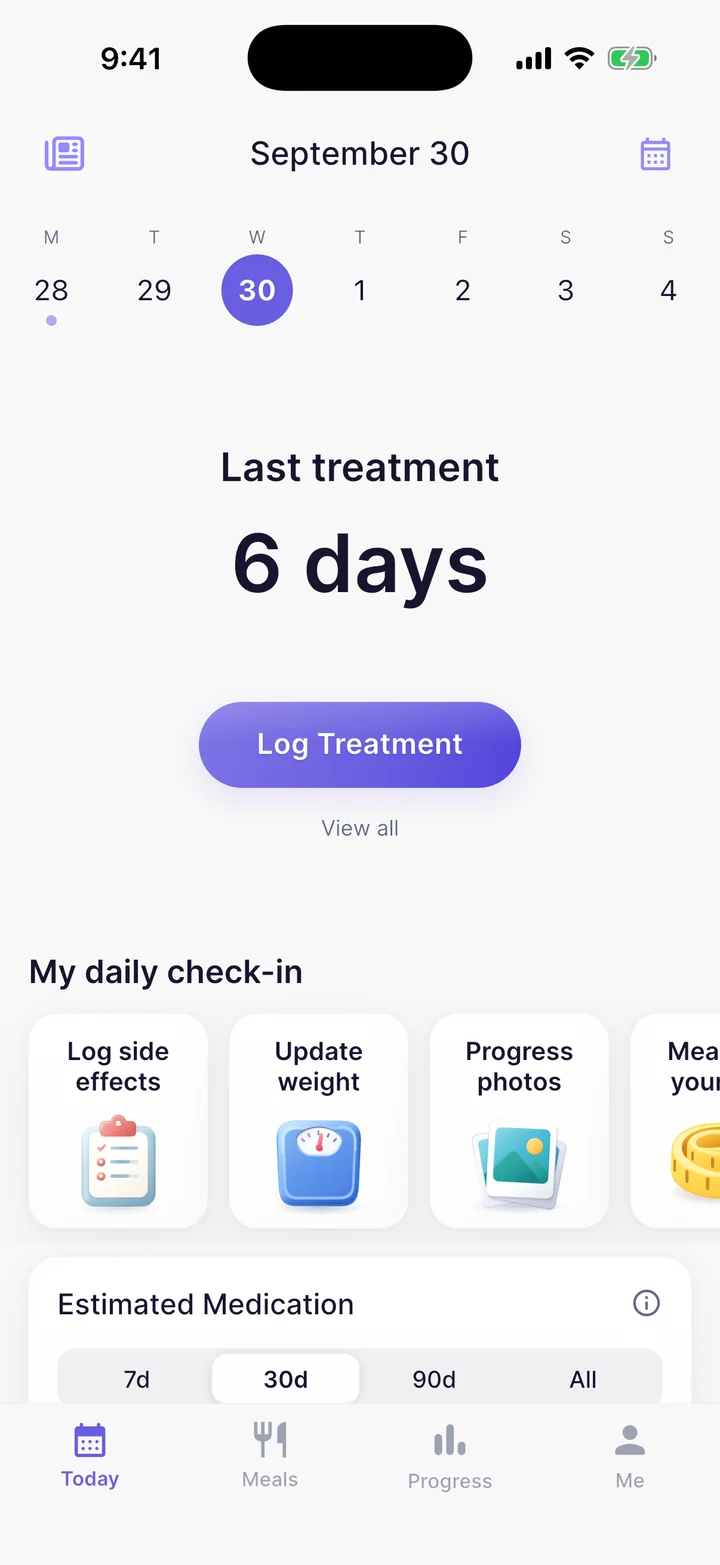
Built for your weight-loss journey.
GlucoPal helps you log doses, rotate injection sites, and track symptoms for Zepbound, Wegovy, and Mounjaro in seconds.


Free to download and use · Optional Pro · iPhone and Android
Continue reading
All articlesMyFitnessPal GLP-1 Support vs GlucoPal: Should You Just Use MyFitnessPal? (2026)
MyFitnessPal GLP-1 Support vs GlucoPal compared on dose logging, injection sites, side effects, food tracking, exports, and price, checked against primary sources.
Noom GLP-1 vs GlucoPal: Program or Tracker? (2026)
Noom GLP-1 vs GlucoPal compared: Noom Med is a telehealth program, GlucoPal is the daily record. Tracking, exports, medication coverage, and pricing.
Lilly Health vs GlucoPal: The Official Zepbound App Compared (2026)
Lilly Health vs GlucoPal compared on medication coverage, food logging, side effects, injection sites, exports, and privacy, verified against both App Store listings.